Mathura – The Birthplace of Lord Krishna
Mathura, one of India’s oldest and holiest cities, stands as the sacred birthplace of Lord Krishna – the eighth incarnation of Lord Vishnu. Located on the banks of the revered Yamuna River in Uttar Pradesh, this ancient city is steeped in 5,000 years of mythology, spirituality, and cultural heritage. As one of the seven sacred cities (Sapta Puri) in Hinduism, Mathura attracts millions of pilgrims and tourists annually who come to walk in Krishna’s footsteps, experience divine darshan at ancient temples, and immerse themselves in the region’s vibrant spiritual atmosphere.
From the prison cell where Krishna was born to the ghats where he played, every corner of Mathura resonates with stories from his extraordinary life.
Best Time to Visit: October to March (15°C – 25°C)
Famous Festivals: Janmashtami (Aug), Holi (Mar), Radhashtami (Sep)
Languages: Hindi, Braj Bhasha, English
Famous For: Krishna’s birthplace, temples, Mathura peda (sweet), spiritual heritage.
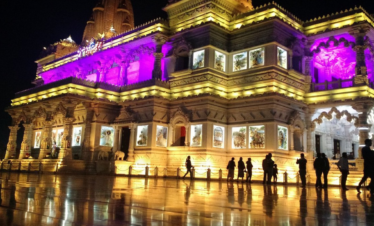
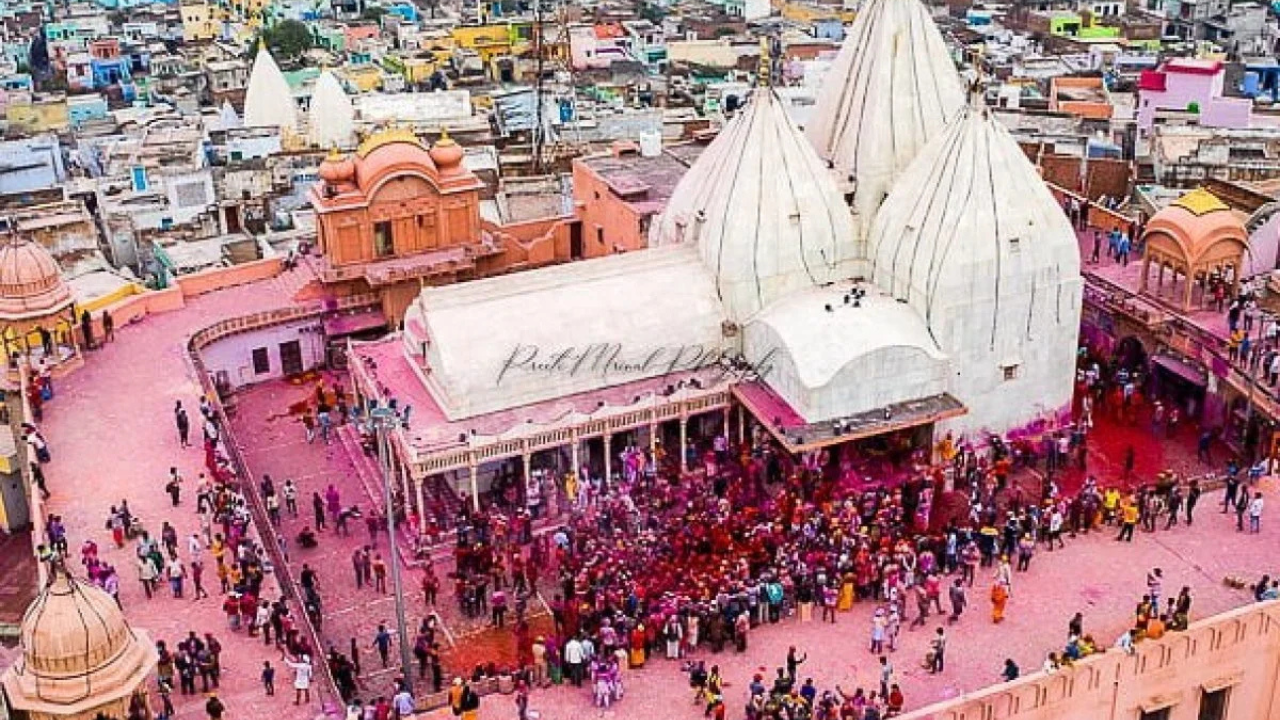
Shri Krishna Janmabhoomi (Birthplace of Lord Krishna): Shri Krishna Janmabhoomi Temple Complex is the most sacred and revered site in Mathura, believed to be the exact spot where Lord Krishna was born over 5,000 years ago. The temple stands on the very prison cell (Garbha Griha) where Devaki and Vasudeva were imprisoned by the tyrannical King Kansa. According to ancient texts and the Bhagavata Purana, Krishna was born at midnight during the month of Bhadrapada, and divine intervention opened all prison doors, allowing his father to carry baby Krishna across the Yamuna River to safety in Gokul.
The original temple was first built by Krishna’s great-grandson Vajranabh. Over centuries, the temple faced multiple destructions and reconstructions – it was rebuilt during Emperor Chandragupta Vikramaditya’s reign in the 4th century CE, destroyed by Mahmud of Ghazni in 1017 CE, rebuilt again, and then demolished by Aurangzeb in 1670 CE who constructed the Shahi Eidgah Mosque adjacent to it.
The modern temple complex was reconstructed in the 1950s through efforts led by Pandit Madan Mohan Malaviya and the Shri Krishna Janmabhoomi Trust, with major contributions from industrialist Ramkrishna Dalmia. Today, the complex houses the Keshavdev Temple (main shrine), the underground Garbha Griha (birth chamber), Bhagavata Bhavan with five shrines, and a museum. The architecture blends traditional Hindu temple design with modern construction, featuring intricate carvings depicting Krishna’s life story.
Timings Morning: 5:00 AM – 12:00 PM
Evening: 4:00 PM – 9:00 PM
Daily (Open all days)
Entry Fee FREE for all visitors
Guided tours: ₹200-300
Duration 2-3 hours recommended
Location Near Deeg Gate Chauraha, Mathura – Deeg Marg
3 km from Mathura Junction Railway Station
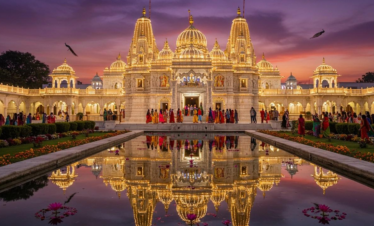
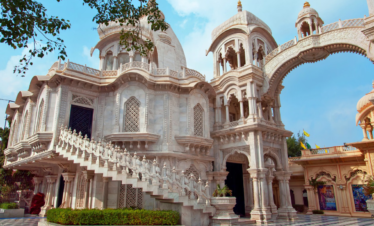
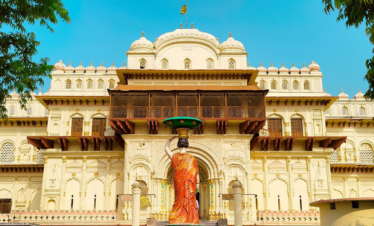
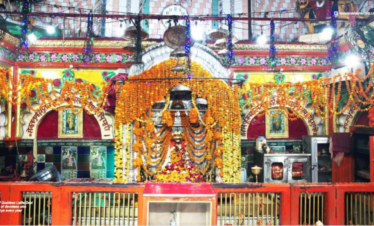
Dwarkadhish Temple – The King of Dwarka Dwarkadhish Temple, one of Mathura’s most architecturally stunning temples, was built in 1814 by Seth Gokul Das Parikh, the treasurer of the Gwalior Estate and a devoted follower of Lord Krishna. The temple is dedicated to Lord Krishna in his majestic royal form as Dwarkadhish – the King of Dwarka, the legendary city Krishna established on land reclaimed from the sea. Unlike other temples that depict Krishna as a playful child (Bal Gopal), this temple showcases him as a divine king seated on a throne alongside Radha Rani.
The temple’s architecture is a magnificent blend of Rajasthani and Mughal styles, featuring intricate jharokhas (ornate balconies), beautifully carved pillars, painted ceilings depicting Krishna’s leelas, and ornamental arches. The temple is managed by followers of the Pushti Marg tradition established by Mahaprabhu Vallabhacharya. The main sanctum houses a black marble idol of Krishna adorned daily with new clothes and jewelry. The temple premises are divided into three sections by five exquisitely carved pillars – the right lane for women, far left for men, and center lane for VIP pass holders. The ceiling paintings narrate Krishna’s entire life story in vibrant colors.
Located near Vishram Ghat on the Yamuna riverfront, the temple atmosphere buzzes with devotional energy throughout the day. During the auspicious month of Shravan, the deity is placed on a beautifully decorated Hindola (swing), and devotees offer flowers, Tulsi leaves, and sweets.
Timings Summer: 6:00 AM – 1:00 PM, 5:00 PM – 9:30 PM
Winter: 6:00 AM – 1:00 PM, 4:30 PM – 8:30 PM
Entry Fee FREE for all visitors
Duration 1-2 hours
Location Pathak Gali, near Vishram Ghat, Mathura
3-4 km from Mathura Junction
Special Evening Aarti at 7:00 PM | Yamuna Aarti at nearby Vishram Ghat at 6:00 AM & 7:30 PM
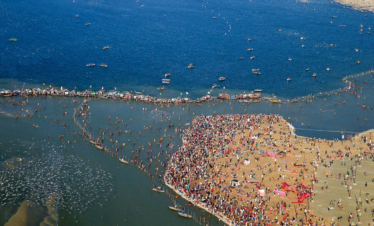
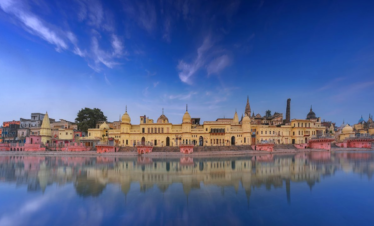
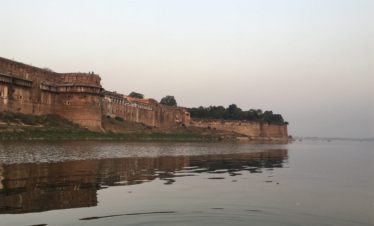
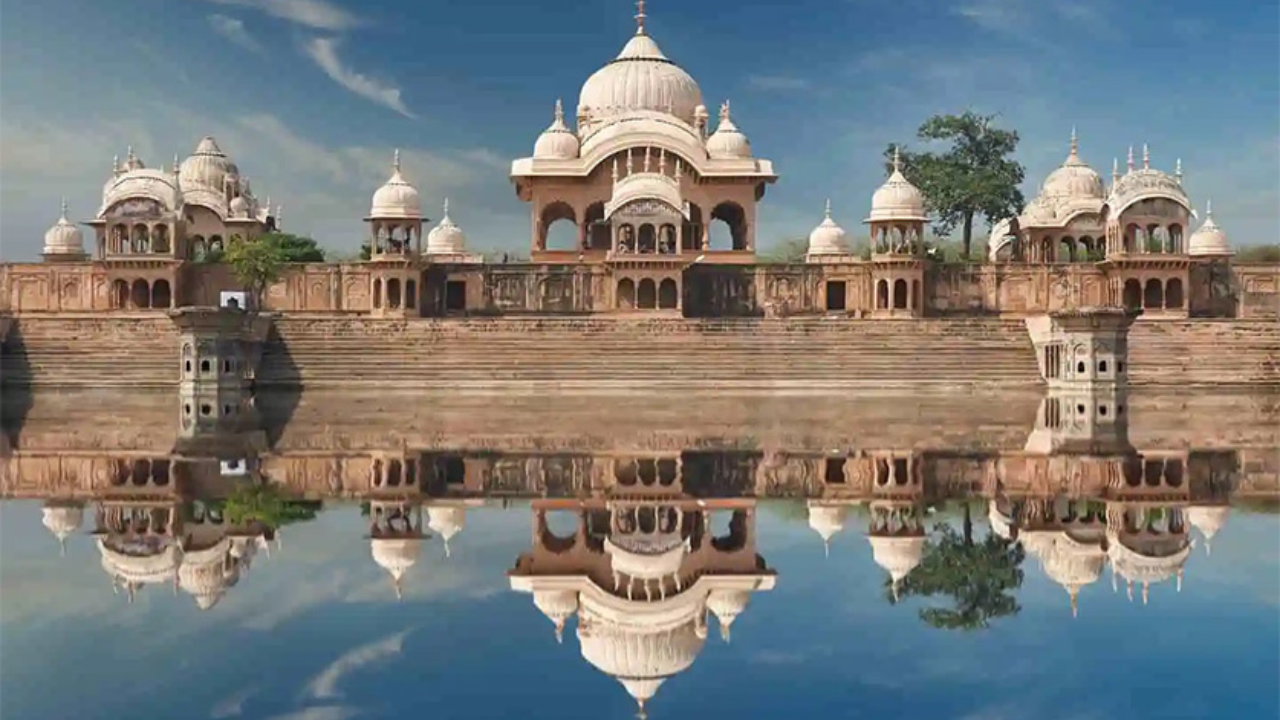
Vishram Ghat – The Sacred Resting Place Vishram Ghat holds immense mythological and spiritual significance as the sacred spot where Lord Krishna rested (‘Vishram’ means ‘rest’) after vanquishing the demon king Kansa, his tyrannical maternal uncle who had imprisoned his parents and terrorized Mathura. According to legend, after the fierce battle, Krishna came to this ghat on the banks of the Yamuna River and sat under the shade of Giriraj Ji to rest and refresh himself. This ghat serves as the central point of Mathura’s 25 ghats – with 12 ghats on the north side and 12 on the south.
The ghat’s history dates back thousands of years and has witnessed numerous historical events. During the Mughal era in the 15th century, Emperor Sikandar Lodi issued decrees against Hindu practices at the ghat, but through the dedication and commitment of Acharya Keshav Bhatt Kashmiri of the Nimbark sect and Vallabhacharya Ji Maharaj, these restrictions were eventually removed. The ghat’s architecture features beautiful marble stonework and a massive stone arch entrance. It is lined with numerous temples and shrines including Yamuna-Krishna Temple, Murli Manohar Temple, and several others dedicated to various deities.
Pilgrims believe that bathing in the holy waters of Yamuna at Vishram Ghat cleanses them of all sins and grants moksha (liberation). The traditional ritual of Parikrama (circumambulation of sacred sites in Mathura) both begins and ends at this ghat, making it the spiritual heart of the city. Morning and evening Yamuna Aartis at this ghat are spectacular events where thousands of diyas (earthen lamps) float on the river, creating a mesmerizing sight.
Timings 24 hours (Open all day)
Best visit: Early morning or evening for Aarti
Aarti Times Morning Aarti: 6:00 AM
Evening Aarti: 7:30 PM
Entry Fee FREE
Location Vishram Bazar, Choubey Para, Mathura
4 km from Mathura Junction
Activities Holy bath in Yamuna, Aarti participation, boat rides, Parikrama starting point
Gita Mandir (Birla Temple) – Temple of Divine Knowledge Gita Mandir, popularly known as Birla Mandir, is a magnificent modern temple built by the renowned industrialist and philanthropist Jugal Kishore Birla of the famous Birla family in 1946, dedicated to the memory of his parents. What makes this temple truly unique and extraordinary is that the entire 700 verses of the Bhagavad Gita – the sacred Hindu scripture containing Lord Krishna’s divine teachings to Arjuna on the battlefield of Kurukshetra – are inscribed on the temple’s pillars and walls in fine calligraphy.
The temple was inaugurated by Mahatma Gandhi himself on February 25, 1946, symbolizing its importance as a place of universal harmony and spiritual learning. The architectural design, created by renowned architect Shri Sris Chandra Chatterjee, beautifully blends ancient and modern Indian architectural elements. The temple is constructed using red sandstone and white marble, showcasing traditional Nagara-style Hindu architecture with spacious halls, ornate domes, and a tall shikhara (spire) adorned with intricate floral and geometric carvings. The main sanctum houses a beautiful white marble idol of Radha-Krishna, while additional sanctums enshrine Lakshmi-Narayan and Sita-Ram.
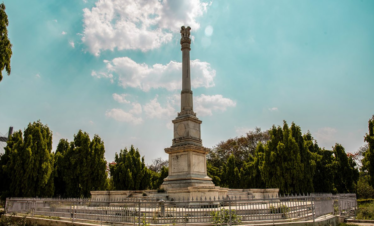
The temple complex also features Lord Krishna’s chariot, the Gita Stambh (an 18-meter tall victory tower with Gita verses carved on it), a museum displaying historical artifacts, a planetarium for astronomical education, beautiful gardens for meditation, and a small Hanuman temple. The vehicle of Lord Vishnu, Garuda, sits opposite the main sanctum with folded hands in devotion. The marble walls are adorned with exquisite paintings depicting various gods, goddesses, and scenes from Hindu epics and mythology, creating a visual narrative of divine stories.
Timings Summer: 5:00 AM – 12:00 PM, 2:00 PM – 8:00 PM
Winter: 5:30 AM – 12:00 PM, 2:00 PM – 8:30 PM
Aarti Times Morning Aarti: 7:00 AM | Evening Aarti: 7:00 PM
Entry Fee FREE
Duration 1.5-2 hours
Location Mathura-Vrindavan Road, Garravkendra, Mathura
6.5 km from Mathura Junction
Explore the vibrant and historic heart of Braj Bhoomi.
- Trip Info: Destination: Mathura | Guide: One Person | Language: Hindi, English
- Trip Type: Outstation Taxi Booking
- Free Cancellation: Yes
- Key Attractions: * Shri Krishna Janmabhoomi Temple Complex.
- Dwarkadhish Temple and Vishram Ghat.
- The Mathura Museum showcasing ancient Buddhist and Hindu art.
Key Attractions
- Shri Krishna Janmabhoomi